
Photography Guide: Best Spots & Tips for Nashik Kumbh Mela 2027
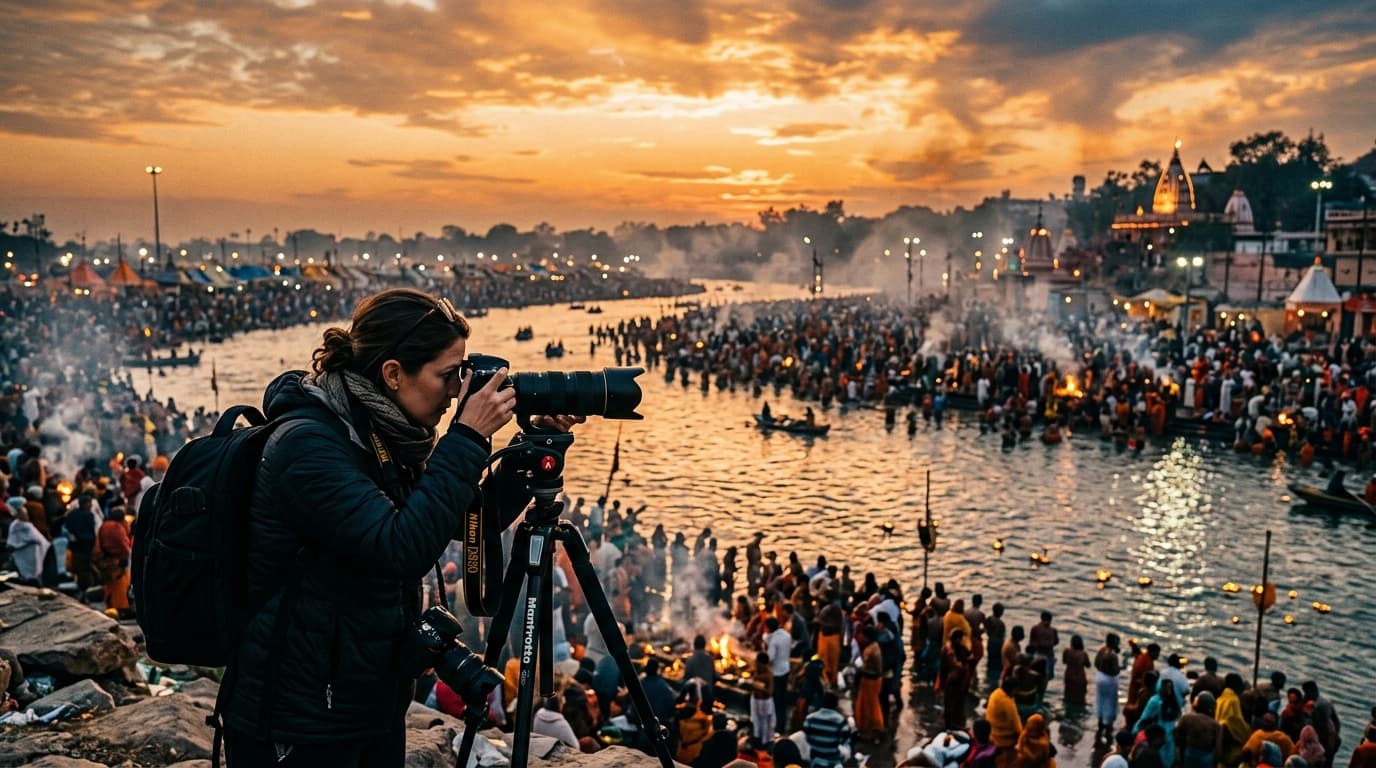
The best photography locations at the Nashik Kumbh Mela are Ramkund during the pre-dawn Shahi Snan (4:00-6:00 AM), the Akhara procession routes along Panchavati Road, the elevated viewpoint near Naroshankar Temple, the Godavari riverbank ghats at sunset, and the Sadhugram tent city for portraits of sadhus. Always ask permission before photographing Naga Sadhus — many welcome it, but photographing their sacred rituals without consent can result in your camera being confiscated.
The Kumbh Mela is widely regarded as the greatest photographic opportunity on Earth. The colors, the chaos, the devotion, and the sheer scale of humanity converging on a single river creates images that have won Pulitzer Prizes and National Geographic covers. Whether you are a professional photographer or shooting on your smartphone, this guide will help you capture the moments of a lifetime.
The Top 5 Photography Locations
1. Ramkund — The Holy Epicenter
Ramkund is THE shot. The stone steps descending into the Godavari, crowded with pilgrims bathing, praying, and offering flowers — this is the iconic Kumbh Mela image.
- Best Time: 4:30 AM to 6:30 AM. The pre-dawn blue hour transitioning to golden sunrise, with oil lamps reflecting in the water, is pure magic.
- Position: Station yourself on the upper ghats (south side) for an elevated wide-angle view. Or get low at water level on the north steps for intimate close-ups with reflections.
- Insider Tip: During the Shahi Snan, the ghats will be packed with security. Media photographers need accreditation from the Kumbh Mela Press Office. For general visitors, arrive 2 hours before the scheduled bathing time to secure a good position.
2. Akhara Procession Routes
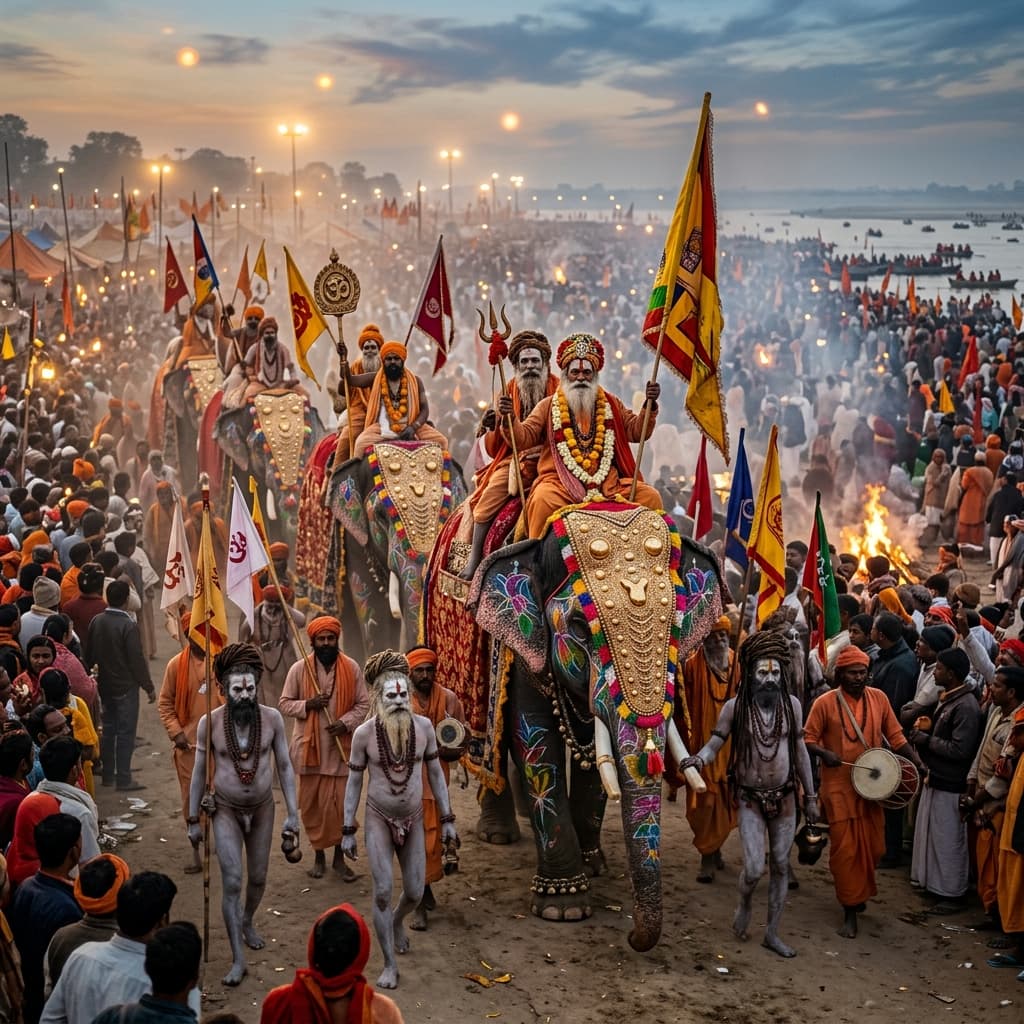
The Shahi Snan processions — where Naga Sadhus and Akhara leaders march to the ghats on elephants, horses, and decorated chariots — are the most visually spectacular events of the Kumbh Mela. The processions move along Panchavati Road towards Ramkund.
- Best Position: Find an elevated spot along the route — a first-floor balcony, a rooftop, or the pedestrian overpass.
- Lens: A 70-200mm telephoto zoom is ideal for capturing facial expressions from a distance without blocking the procession.
3. Naroshankar Temple Viewpoint
The area near Naroshankar Temple offers an elevated perspective of the entire Ramkund complex and the Godavari riverfront. This is the best location for panoramic shots and time-lapse videos.
4. Sadhugram Tent City — Portraits
The temporary Sadhu camps (Sadhugram) are a portrait photographer's paradise. You will find ash-covered Naga Sadhus, elaborately dressed Vaishnavite saints, Aghori ascetics, and musicians performing traditional bhajans.
- Etiquette: Always greet with "Namo Narayan" or "Har Har Mahadev" before raising your camera. Many sadhus are happy to pose in exchange for a small donation (₹50-100). Never photograph a sadhu who is performing private rituals or meditation.
- Warning: Some sadhus who are covered in ash or wearing specific marks may become aggressive if photographed without permission. Read the room and always ask first.
5. Godavari Riverbank at Sunset
The evening Aarti on the Godavari ghats, with hundreds of floating oil lamps and the silhouettes of temples against the sunset sky, creates stunning backlit imagery. Use the Sundarnarayan Temple ghat or the Kapaleshwar Temple steps for the best sunset angle.
Gear Recommendations
- Camera Body: Any DSLR or mirrorless camera. For smartphones, the latest iPhones and Samsung Galaxy Ultra series produce excellent results in low light.
- Wide-Angle Lens (16-35mm): For capturing the sheer scale of the crowds and ghats.
- Telephoto Zoom (70-200mm): For procession shots and candid portraits from a respectful distance.
- Fast Prime (50mm f/1.4 or 35mm f/1.8): For low-light dawn shots and shallow depth-of-field portraits.
- Rain Protection: The Shahi Snan dates are during peak monsoon. Carry a waterproof camera bag and rain covers for your lenses.
- Memory Cards: Bring at least 128GB. You will shoot thousands of images.
The Insider's Composition Hack
The single most powerful composition trick at the Kumbh Mela is shooting into the light. Position yourself so the morning or evening sun is behind your subjects. The incense smoke, river mist, and dust particles will become illuminated, creating dramatic "god rays" that transform an ordinary photo into a masterpiece. Every award-winning Kumbh Mela photograph uses this backlighting technique.
For a detailed day-by-day photography itinerary, download our Premium Ebook which includes GPS coordinates of all shooting locations and a printable shot list.
Frequently Asked Questions
Can I photograph Naga Sadhus at Kumbh Mela?
Yes, but always ask permission first by greeting them with 'Namo Narayan' or 'Har Har Mahadev.' Many sadhus are happy to pose for a small donation. Never photograph private rituals without consent.
What is the best time for photography at Kumbh Mela?
The golden hours are 4:30-6:30 AM (pre-dawn to sunrise) and 5:30-7:00 PM (sunset to evening Aarti). The pre-dawn Shahi Snan processions and bathing scenes produce the most iconic images.
Do I need media accreditation for photography?
For general photography with personal cameras and smartphones, no accreditation is needed. However, professional media photographers who need access to restricted press areas near the ghats during Shahi Snan must obtain accreditation from the Kumbh Mela Press Office.
Is it safe to carry expensive camera gear at Kumbh Mela?
Generally yes, but be vigilant in dense crowds. Use a secure cross-body camera strap, keep your bag zipped and in front of you at all times, and avoid displaying expensive equipment unnecessarily. Read our scam prevention guide for more tips.
Related Articles
Planning Your Trip?
Don't leave anything to chance. Download our massive 63-page Premium Ebook covering every aspect of the 2027 Nashik Kumbh Mela.
Get The Master Guidearrow_forward