
Trimbakeshwar VIP Darshan & Sacred Pooja Booking Guide 2026-2027: Kalsarpa, Narayan Nagbali Rates & Kushavarta Snan Rules
⚡ Key Takeaways: Trimbakeshwar Darshan & Pooja at a Glance
- VIP / Special Darshan Pass: Fixed at ₹200 per person via official Shree Trimbakeshwar Devasthan Trust counters and trust portal. Reduces waiting from 4–8 hours to under 45 minutes.
- Kalsarpa Shanti Cost: ₹1,100 to ₹1,500 for group rituals; ₹2,100 to ₹2,500 for individual private havan. Total duration: 2 to 3 hours.
- Narayan Nagbali Cost & Duration: 3-day residential ritual costing ₹7,000 to ₹10,000 inclusive of Vedic samagri and Brahmin dakshina. Must be performed at Trimbakeshwar.
- Temple Timings: Gates open 5:30 AM to 9:00 PM. Sacred Sparsh Darshan (touching the Jyotirlinga) is strictly 5:30 AM – 6:00 AM.
- Kushavarta Kund Snan Rules: Mandatory holy bath before performing any vidhi. On Shahi Snan dates, Kushavarta is reserved exclusively for the 7 Shaiva Akhadas until 1:00 PM.
- Authorized Priests Only: Engage only registered Tamrapatradhari (hereditary copper-plate) Gurujis affiliated with the Trimbakeshwar Purohit Sangh. Never pay cash to auto drivers or touts.
Why Trimbakeshwar is the Epicenter of Sacred Remedies
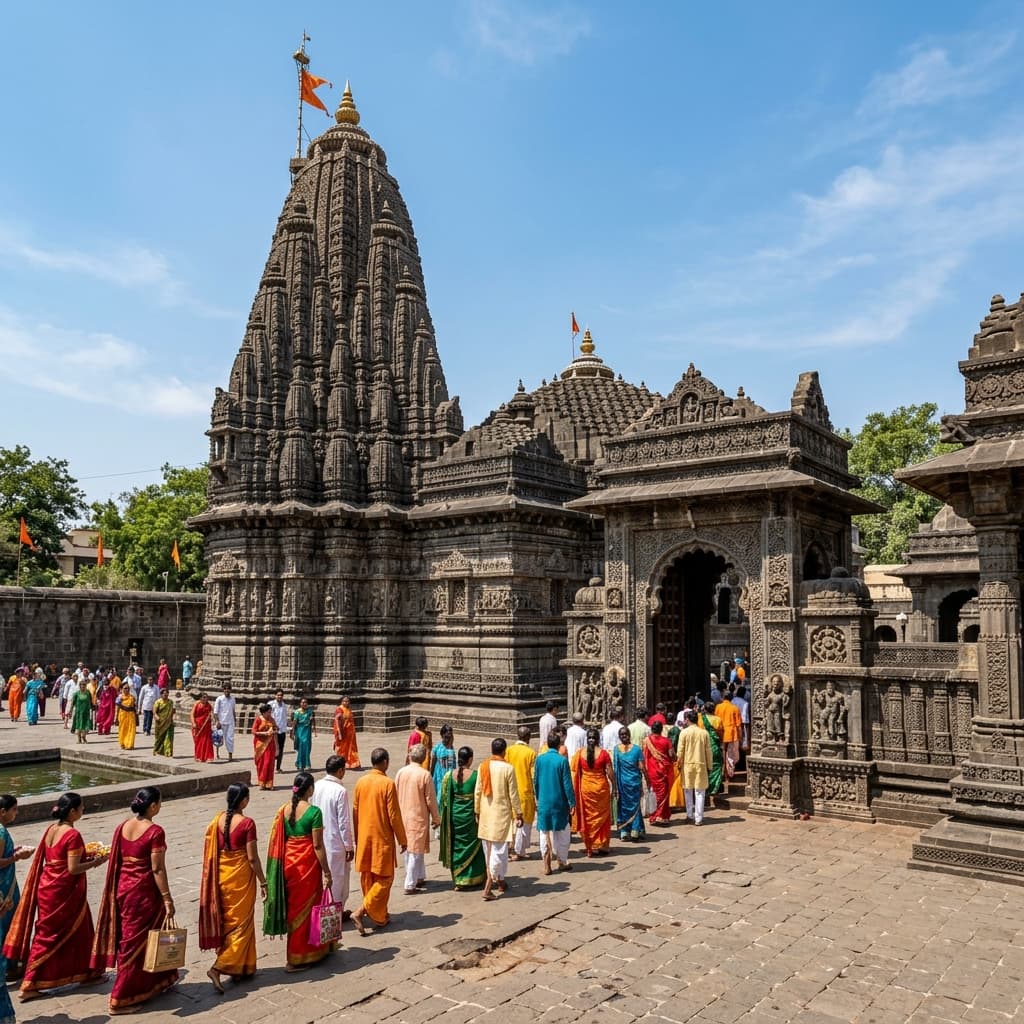
Located 28 km west of Nashik at the foothills of the Brahmagiri mountain, Trimbakeshwar is one of the most sacred spiritual centers in India. It is revered for two supreme reasons:
- The Unique Three-Faced Jyotirlinga: Unlike the other 11 Jyotirlingas which represent solely Lord Shiva, the natural cavern inside the Trimbakeshwar sanctum houses three Lingas representing the Hindu trinity: Lord Brahma, Lord Vishnu, and Lord Rudra (Shiva).
- The Origin of Sacred River Godavari: River Godavari (Dakshin Ganga) originates at the peak of Brahmagiri and descends into the sacred Kushavarta Kund inside Trimbak town, where Sage Gautama consecrated its waters.
During the 2026-2027 Simhastha Kumbh Mela, while Vaishnava Akhadas gather at Ramkund in Nashik, all 7 Shaiva Akhadas (including the Juna, Niranjani, and Mahanirvani Akhadas with thousands of Naga Sadhus) pitch their camps exclusively in Trimbakeshwar for their royal Shahi Snan.
Comparison Table: Sacred Poojas, Rates & Durations in Trimbakeshwar
Below is the verified price and duration schedule for traditional Vedic rituals conducted by registered Purohits in Trimbakeshwar:
| Ritual (Pooja) Name | Duration | Typical Dakshina + Samagri | Primary Purpose & Remedy | Recommended Muhurat |
|---|---|---|---|---|
| Kalsarpa Yoga Shanti | 2 to 3 Hours | ₹1,100 – ₹2,500 | Neutralizes Rahu-Ketu planetary affliction, career setbacks & recurring health anxiety | Amavasya, Nag Panchami, or Shravan Mondays |
| Narayan Nagbali | 3 Days (Residential) | ₹7,000 – ₹10,000 | Alleviates severe Pitru Dosh (ancestral curses), unexplained family misfortunes & childlessness | Specific astronomical Tithis determined by Guruji |
| Tripindi Shradha | 2 Hours | ₹1,500 – ₹2,500 | Pacifies unsatisfied spirits across three ancestral generations (paternal, maternal, wife's side) | Pitru Paksha, Bharani Shraddha, or Amavasya |
| Maha Mrityunjaya Jaap & Havan | 3 to 4 Hours | ₹2,100 – ₹5,100 | Invokes Lord Shiva for recovery from chronic illness, protection from untimely demise & vitality | Mondays, Pradosh Vrat, or Masa Shivratri |
| Laghu Rudra / Rudrabhishek | 1.5 to 2.5 Hours | ₹1,000 – ₹2,100 | Vedic abhishekam with Panchamrit for family prosperity, peace of mind & spiritual cleansing | Early morning daily slots |
VIP Darshan vs. Free Mukh Darshan: How to Plan Your Entry
The Shree Trimbakeshwar Devasthan Trust manages crowd flow through distinct entry queues to protect the sanctum and manage millions of pilgrims:
1. General Free Queue (Mukh Darshan)
Open to every devotee without any ticket or registration. Devotees walk through covered barricaded queues into the Sabha Mandap to view the Jyotirlinga from approximately 15 feet away through a reflective mirror. On normal weekdays, waiting takes 1.5 to 3 hours; on weekends, Pradosh, and Shravan Mondays, waiting stretches to 5 to 8 hours. During Kumbh Mela Shahi Snan dates, general lines can take 10+ hours.
2. Special / VIP Darshan (₹200 Paid Pass)
The trust provides a Special Darshan Pass at ₹200 per head. This entry uses a dedicated queue channel that bypasses the long outer barricades, bringing you directly to the Sabha Mandap. Total queue time usually ranges between 30 and 60 minutes. Tickets can be purchased at the Trust counter adjacent to the East Gate or pre-booked online through the official trust portal.
3. Sparsh Darshan (Touching the Jyotirlinga)
Because the original rock Jyotirlinga is prone to erosion from natural water springs, Sparsh Darshan (entering the Garbhagriha to touch the holy Linga) is strictly restricted to a 30-minute window: 5:30 AM to 6:00 AM daily. Men must wear an unstitched traditional dhoti (no stitched kurtas or trousers permitted inside the inner sanctum), and women must observe strict Vedic dress guidelines. Devotees must register at the Trust office one day in advance.
Kushavarta Kund Holy Snan Rules: What Every Pilgrim Must Know
Kushavarta Kund is a sacred rectangular masonry tank situated 400 meters from the temple. According to the Skanda Purana, Sage Gautama bound the wandering Godavari River using a blade of Kusha grass (Darbha), making its water universally purifying.
Rules for Bathing in Kushavarta Kund:
- Mandatory Pre-Pooja Bath: Devotees performing Kalsarpa or Narayan Nagbali must take a holy dip in Kushavarta wearing a dhoti or simple cotton cloth prior to the commencement of the rituals.
- Soaps and Detergents Strictly Banned: Using soap, shampoo, or washing dirty clothes in the sacred tank is a punishable legal offense enforced by local police and municipal marshals.
- Shahi Snan Priority: On Simhastha Shahi Snan dates (2 August 2027, 31 August 2027, and 12 September 2027), Kushavarta Kund is cordoned off for the royal processions of Shaiva Akhadas. General pilgrims will only be granted access during authorized afternoon or late-evening intervals.
How to Identify Authorized Pandits and Avoid Middleman Scams
Due to the massive demand for spiritual remedies, unauthorized agents and middleman syndicates operate around Trimbakeshwar bus station, parking lots, and auto stands. They frequently lure pilgrims with false promises of "Direct VIP Sanctum Pooja" for inflated fees ranging from ₹15,000 to ₹30,000.
To ensure your rituals are authentic and your dakshina goes to legitimate Vedic scholars, follow these non-negotiable rules:
- Verify the Tamrapatra (Copper Plate): Legitimate priests belong to the Trimbakeshwar Purohit Sangh and hold hereditary copper-plate authorization certificates (Tamrapatra) passed down through generations. Always ask to see their Purohit Sangh ID card.
- Fixed Dakshina and Samagri Receipts: Genuine Gurujis provide a clear itemized breakdown of costs, including cow ghee, black sesame, silver serpent idols, and Brahmin bhojan fees, and issue a written receipt.
- Never Pay Auto Drivers or Hotel Staff: Auto-rickshaw drivers and hotel receptionists often receive a 30% to 50% commission for redirecting unsuspecting tourists to unregulated ritual shops. Always contact authorized Purohits directly.
How to Reach Trimbakeshwar from Nashik City
Trimbakeshwar is located 28 km west of Nashik CBS (Central Bus Stand). Travel options include:
- MSRTC Electric / City Buses: Depart every 10 to 15 minutes from Nashik CBS, Mela Stand, and Nashik Road Railway Station. Fare is ₹40 to ₹60 per passenger; travel time is approximately 45 to 60 minutes.
- Shared Taxis: Operate continuously from CBS Circle and Trimbak Naka for ₹70 to ₹100 per seat.
- Private Vehicles during Kumbh: Note that private four-wheelers and tourist buses will be stopped at peripheral parking grounds (P7 and P8) 5 km outside Trimbakeshwar during festival days. Free electric feeder shuttles ferry pilgrims from parking grounds to the town perimeter.
Where to Stay in Trimbakeshwar
While many pilgrims stay in Panchavati, Nashik (read our Budget Dharamshalas Near Ramkund guide), performing 3-day rituals like Narayan Nagbali requires staying locally in Trimbak town. Recommended trust accommodations include:
- Shri Gajanan Maharaj Sansthan: Located near the temple bypass; spotless rooms from ₹400 to ₹900/night with pure Mahaprasad dining.
- Maheshwari Bhawan Trimbakeshwar: Large community trust lodging with AC and Non-AC family rooms (₹600–₹1,500).
- Brahman Mahasabha Dharamshala: Budget rooms and dormitories primarily catering to ritual performers (₹300–₹700).
Frequently Asked Questions
How much does a VIP Darshan ticket cost at Trimbakeshwar Temple?
The official Special / VIP Darshan pass issued by Shree Trimbakeshwar Devasthan Trust costs ₹200 per person. It allows priority fast-track entry into the main temple sabha mandap, cutting the waiting time from 3–6 hours in the general queue down to approximately 30–60 minutes.
What is the official rate for Kalsarpa Shanti Pooja in Trimbakeshwar?
Standard group Kalsarpa Shanti Pooja costs between ₹1,100 and ₹1,500 per devotee including havan samagri. For an exclusive, individual private pooja performed with dedicated Vedic pandits, the dakshina typically ranges from ₹2,100 to ₹2,500. Beware of unauthorized touts asking for ₹5,000 to ₹10,000.
How many days does the Narayan Nagbali ritual take?
Narayan Nagbali is a rigorous 3-day residential ritual performed specifically at Trimbakeshwar to alleviate Pitru Dosh and ancestral karma. Devotees must stay in Trimbakeshwar for the entire 3 days. The complete Dakshina and samagri package usually ranges from ₹7,000 to ₹10,000.
Can general pilgrims bathe in Kushavarta Kund on Shahi Snan dates?
On official Kumbh Mela Shahi Snan dates (2 August 2027, 31 August 2027, and 12 September 2027), Kushavarta Kund is exclusively reserved for the 7 Shaiva Akhadas and their Naga Sadhus from midnight until approximately 1:00 PM to 2:00 PM. General public pilgrims are permitted to bathe only in designated afternoon and evening windows once the Akhada royal processions conclude.
What is the dress code for Trimbakeshwar Temple darshan and poojas?
For general Mukh Darshan, modest casual clothing is permitted. However, for early morning Sparsh Darshan (5:30 AM – 6:00 AM) and for participating in rituals like Kalsarpa or Rudrabhishek, strict traditional Vedic attire is enforced: men must wear an unstitched cotton dhoti and sovle (upper cloth or angavastram) without a shirt, and women must wear a traditional saree or modest salwar kameez.
Related Articles

Planning Your Trip?
Don't leave anything to chance. Download our massive 63-page Premium Ebook covering every aspect of the 2027 Nashik Kumbh Mela.
Get The Master Guidearrow_forward