
Who Are the Naga Sadhus? A Complete History
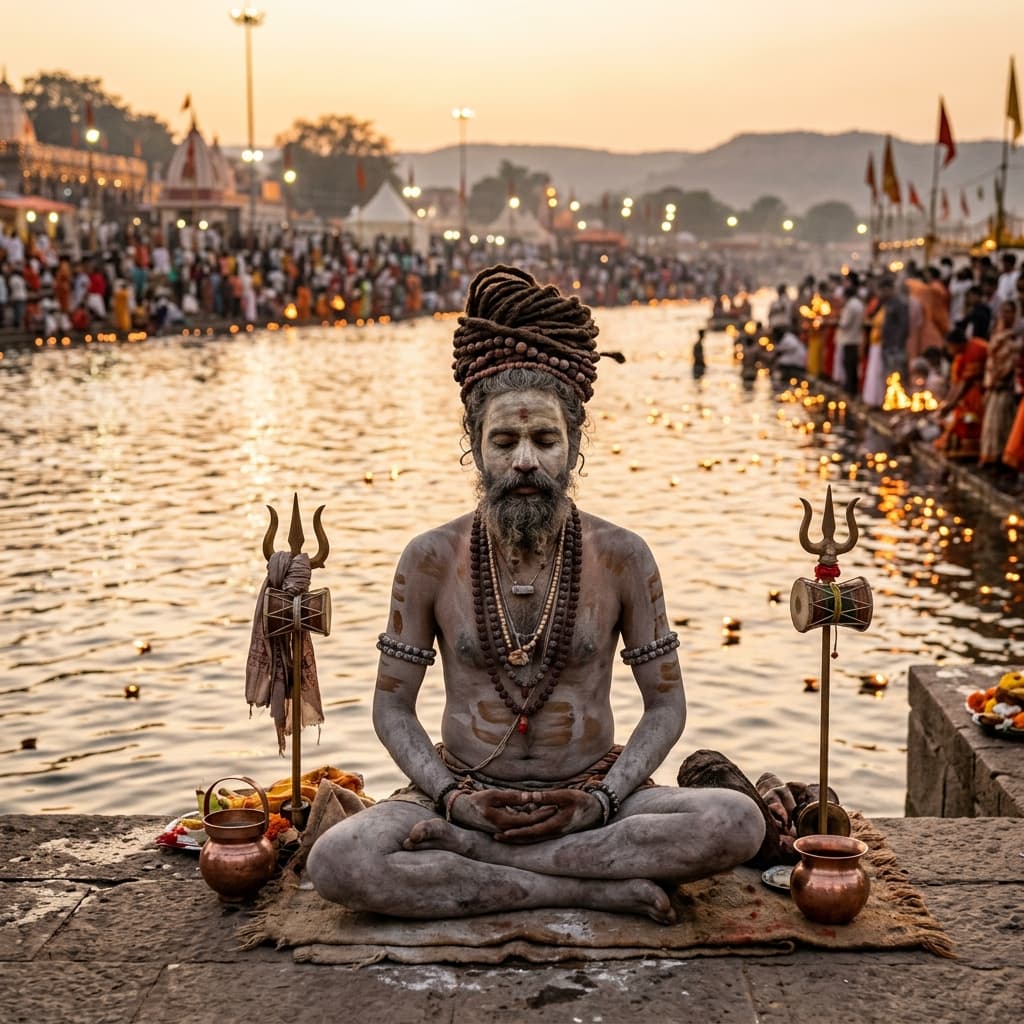
Naga Sadhus are fierce, weapon-wielding, ash-covered ascetic monks who have renounced all worldly ties, including clothing. They live in absolute seclusion in the Himalayas and only descend into civilization during the Kumbh Mela to take the holy dip.
For most global tourists, the defining image of the Kumbh Mela is a roaring charge of thousands of naked men covered in white ash, wielding tridents, rushing into the river. These are the Naga Babas. They are not simply holy men; they are an ancient, highly disciplined army.
The Origins of the Warrior Monks
The Naga Sadhu tradition dates back over a thousand years. In the 8th century, the great philosopher Adi Shankaracharya realized that the spiritual knowledge of India was under threat from foreign invasions. To protect the temples, he established the Akhadas (martial camps) and transformed deeply spiritual yogis into a highly trained, armed militia.
For centuries, the Naga Sadhus physically fought massive battles to defend Sanatan Dharma. While they no longer fight physical wars, their military structure remains completely intact today.
The Extreme Initiation (Diksha)
Becoming a Naga Sadhu is one of the most grueling physical and psychological trials on Earth. A normal person cannot simply join. The process takes up to 12 years:
- Renunciation: They must sever all ties with their biological families.
- The Death Ritual: Before being initiated, a prospective Naga must perform his own Pind Daan (the Hindu death ritual). Legally and spiritually, he declares himself dead to the world.
- The Vow of Nakedness: As a symbol of having conquered all worldly desires, ego, and shame, they discard clothing (Digambara). They cover their bodies in holy ash (Bhasma) from funeral pyres or sacred fires, which regulates their body temperature in the freezing Himalayas.
Where Do They Live?
For 11 years out of the 12-year Kumbh cycle, the Nagas live in extreme isolation in high-altitude Himalayan caves, engaging in severe austerities (Tapasya) and Hath Yoga. They do not use money, phones, or modern amenities. They survive entirely on what nature or remote villagers provide.
The Kumbh Mela Phenomenon
The Kumbh Mela is the only time the Naga Sadhus are permitted by their gurus to enter a city. They arrive in the tens of thousands, setting up their tents in Sadhugram (Tapovan). During the Shahi Snan, they are granted the supreme honor of taking the very first dip in the Godavari river. After the Kumbh Mela ends, they disappear back into the mountains overnight.
Frequently Asked Questions
Why do Naga Sadhus wear no clothes?
It is a spiritual vow called Digambara, symbolizing absolute detachment from the material world, ego, and societal shame.
Are Naga Sadhus dangerous to pilgrims?
No. While they appear fierce and carry weapons for tradition, they are deeply spiritual ascetics. However, pilgrims must maintain respectful distance and never photograph them without explicit permission.
Do Naga Sadhus allow women in their camps?
Yes, pilgrims of all genders are allowed to visit their camps (Sadhugram) to seek blessings and offer donations, though strict respect and modesty are expected.
Related Articles

Planning Your Trip?
Don't leave anything to chance. Download our massive 63-page Premium Ebook covering every aspect of the 2027 Nashik Kumbh Mela.
Get The Master Guidearrow_forward