
The History of the Nashik Kumbh: Why Godavari is Sacred
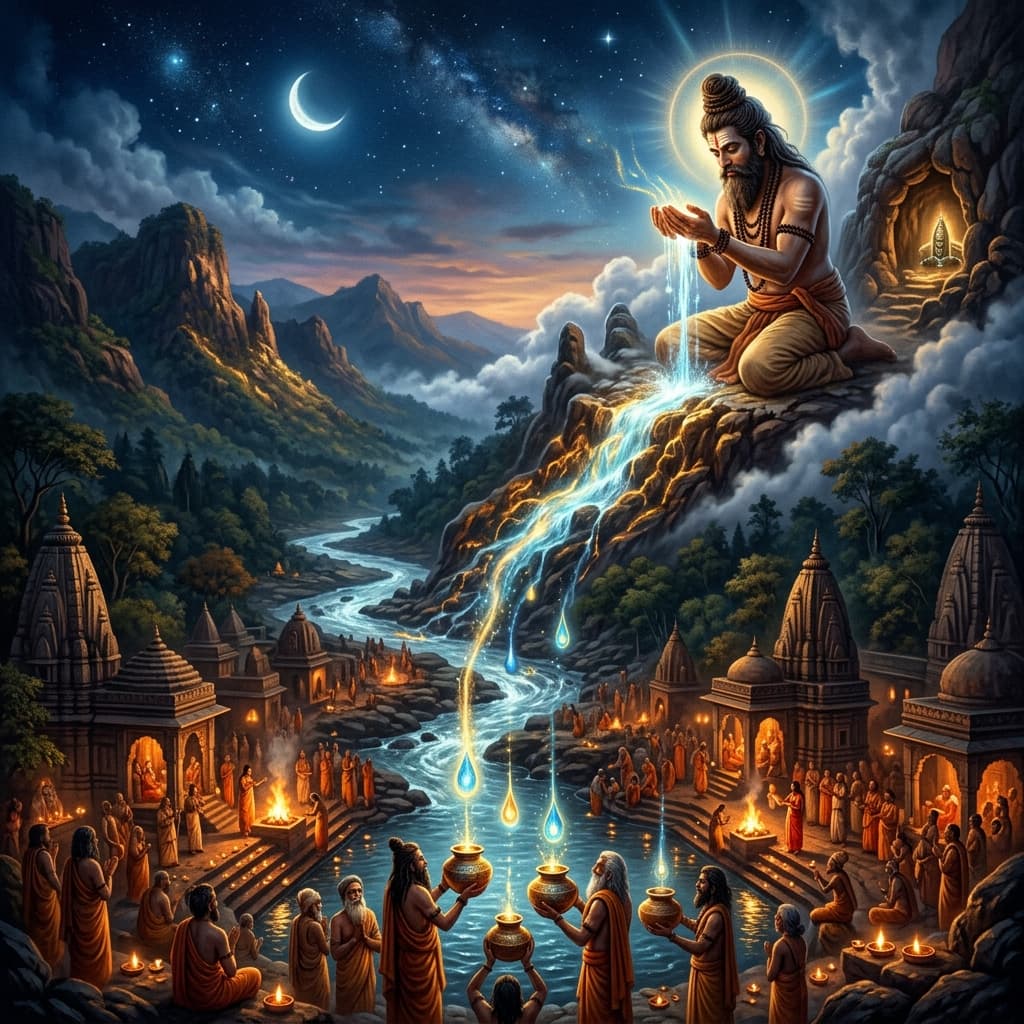
The Nashik Kumbh Mela is celebrated every 12 years because, according to Hindu mythology, drops of the nectar of immortality (Amrit) fell into the Godavari river at Ramkund during an epic cosmic battle between Devas (Gods) and Asuras (Demons).
While Prayagraj, Haridwar, and Ujjain also host Kumbh Melas, the Nashik-Trimbakeshwar Kumbh holds a deeply unique spiritual weight due to its massive associations with Lord Rama, Lord Shiva, and the ancient Naga Sadhus.
The Legend of Samudra Manthan
The origins of the Kumbh Mela trace back to the churning of the cosmic ocean, an event known as Samudra Manthan. The gods and demons agreed to churn the ocean together to extract the nectar of immortality. When the Kumbh (pitcher) containing the Amrit finally emerged, the demons tried to steal it.
Lord Vishnu, disguised as Mohini, intervened, and a cosmic chase ensued. During a 12-day flight to protect the pitcher, four drops of the nectar fell to Earth: at Prayagraj, Haridwar, Ujjain, and Nashik. Because 12 cosmic days equal 12 human years, the Kumbh Mela returns to each city every 12 years to celebrate this divine event.
Why is it called "Simhastha"?
The Nashik Kumbh is specifically called the "Simhastha Kumbh Mela." This is based on complex Vedic astrology. The festival is triggered only when the planet Jupiter (Brihaspati) enters the zodiac sign of Leo (Simha), and the Sun and Moon are in specific alignments.
Insider Knowledge: Astrologically, it is believed that during this exact planetary alignment, the waters of the Godavari river are cosmically energized, turning into spiritual nectar. Bathing during this window washes away the sins of a thousand lifetimes.
The Godavari River: The Ganges of the South
Originating from the Brahmagiri mountains in Trimbakeshwar, the Godavari is India's second-longest river and is fiercely revered as the Dakshin Ganga (Ganges of the South). According to legend, Sage Gautama brought the river down to Earth to wash away the sin of accidentally killing a cow.
The Split between Ramkund and Kushavarta
A unique feature of the Nashik Kumbh Mela is that it happens in two places simultaneously, separated by 30 kilometers. This is due to a historical conflict between sects of Sadhus in the 18th century.
- Ramkund (Nashik City): This is where Lord Rama bathed during his exile. Today, it is reserved for the Vaishnava Sadhus (worshippers of Vishnu/Rama).
- Kushavarta Kund (Trimbakeshwar): This is reserved for the fearsome Naga Babas and Shaiva Sadhus (worshippers of Shiva).
Understanding this history is crucial to experiencing the full depth of the Kumbh Mela. It is not just a festival; it is a living, breathing continuation of India's most ancient epics.
Frequently Asked Questions
Why is Nashik Kumbh Mela called Simhastha?
It is called Simhastha because the festival is held when the planet Jupiter enters the Leo (Simha) constellation.
What is the difference between Ramkund and Kushavarta?
Ramkund in Nashik is where Vaishnava sadhus (worshippers of Vishnu/Rama) bathe, while Kushavarta in Trimbakeshwar is reserved for Shaiva sadhus (worshippers of Shiva).
How often does the Nashik Kumbh Mela happen?
It occurs exactly every 12 years. The last one was in 2015, the next is in 2027, and the one after that will be in 2039.
Related Articles

Planning Your Trip?
Don't leave anything to chance. Download our massive 63-page Premium Ebook covering every aspect of the 2027 Nashik Kumbh Mela.
Get The Master Guidearrow_forward